Modern Laboratory Management Software in Noonu Atoll, Maldives | MocDoc
Posted On
2026082913:22:12
By
Mohammed Siddiq
A Better Laboratory Starts With Better Organization
The laboratory does not necessarily cross one's mind when visiting a healthcare establishment. However, a laboratory report lies at the core of many critical decisions in the area of healthcare.
From regular blood analysis to more complex procedures, a laboratory report plays an essential role in the process of diagnosing patients' conditions and further actions. Therefore, quality, safety, and timeliness of results are crucial factors in the sphere.
Efficiently managing laboratory processes is especially important for island healthcare services that provide assistance to their communities throughout Noonu Atoll in Maldives. Island healthcare services may have unique requirements for information management, sampling, and communication, as well as limited resources.
Laboratory processes conducted using paperwork can complicate the routine activities of health care providers. It will require additional time to look for patients' records, analyze their samples, type in results, and prepare a report.
As laboratory workloads grow, depending only on manual processes may no longer be enough.
A smarter approach begins with digital laboratory management.
Where Do Laboratories Lose Valuable Time?
Laboratory efficiency is not only about how quickly a test is performed.
Time can be lost at many points before and after testing.
A patient's information has to be entered. The correct investigation must be selected. A sample must be collected and identified. The sample then moves through processing. Results need to be entered, checked, and finally converted into a report.
When these steps are handled separately, staff may have to repeat the same information several times.
They may also need to search through different records to answer simple questions:
Where is the sample?
Has the test been completed?
Is the result verified?
Has the report been released?
What was the patient's previous result?
These small delays can affect the overall laboratory experience.
A Laboratory Management software solution can help bring these activities together and make information easier to manage.
Bringing the Complete Laboratory Journey Together
The real strength of a modern LIMS Software is its ability to connect laboratory processes.
Instead of treating registration, sample collection, testing, results, and reporting as separate activities, a LIMS can create one connected workflow.
This can make responsibilities clearer for laboratory staff.
When a test is ordered, the relevant information can move through the workflow without unnecessary manual duplication. As the sample progresses, its status can be updated. Once results are ready, they can move through the required verification process before the final report is generated.
This creates a smoother flow of information.
For a laboratory in Noonu Atoll, such connectivity can be especially useful when teams need to manage diagnostic services efficiently while supporting patients across island communities.
Know Where Every Sample Stands
Sample management is one area where better technology can make a noticeable difference.
A laboratory may handle many samples during a working day. If every sample is tracked manually, identifying its current status can take unnecessary effort.
With Laboratory Sample Tracking management software, laboratories can create greater visibility throughout the sample journey.
Barcode-based identification can help staff quickly recognize samples and reduce dependence on handwritten information. Digital status tracking can also help teams understand whether a sample is waiting, being processed, completed, or ready for reporting.
The objective is not simply to track samples.
It is to build confidence that each sample is moving through the right process.
What Makes a LIMS Truly Useful?
The Best Laboratory Management software should not make laboratory work more complicated.
It should remove unnecessary complexity.
For laboratories considering a new system, usability should be an important factor. Staff should be able to learn the system without spending excessive time understanding complicated processes.
The software should also support the laboratory's complete workflow rather than focusing on only one function.
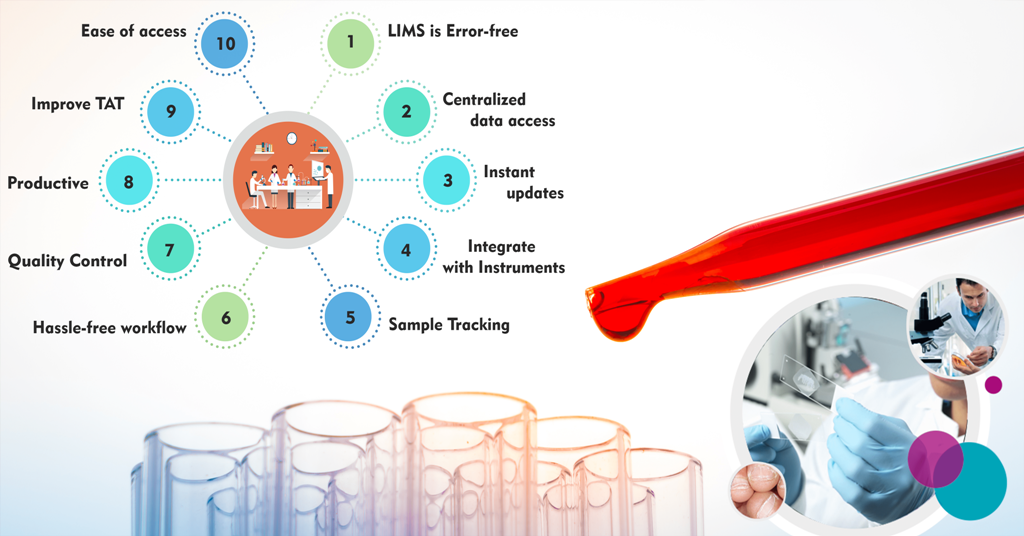
Important capabilities may include patient and test management, sample identification, workflow tracking, result management, report generation, and access to laboratory information.
A good LIMS should also provide room for future growth. As patient numbers, testing requirements, and laboratory services increase, the system should be capable of supporting those changes.
Finding the Best LIMS in Maldives for Noonu Atoll
Searching for the Best LIMS in Maldives should begin with the laboratory's actual needs.
If something fits in one lab, it does not mean it will also fit in another lab. What counts is whether this software can cope with the operational issues of the lab.
As far as Noonu Atoll is concerned, a good LIMS would assist in eliminating manual work, improving sample tracking, organizing laboratory data and accelerating reporting.
This software must provide more control to the laboratory personnel over their routine.
In any case, technology must facilitate people instead of displacing the human aspect of healthcare.
MocDoc LIMS: Turning Laboratory Challenges Into Opportunities
MocDoc LIMS is designed to help laboratories manage their workflows through a connected digital platform.
It can support important activities such as patient registration, test management, sample handling, result entry, verification, and report generation.
By bringing laboratory information into one system, MocDoc can help reduce the need for disconnected records and repeated manual processes.
Its structured sample management capabilities can also help laboratories maintain better visibility of samples throughout their journey.
For laboratory staff, this can mean fewer routine administrative tasks and easier access to information.
For management, a digital system can provide better visibility into laboratory activities and help identify areas where workflows can be improved.
For patients, better-organized laboratory operations can contribute to a smoother healthcare experience.
Digital Transformation Is About More Than Software
Moving to a LIMS is not simply a technology upgrade.
It is a change in the way a laboratory works.
Instead of searching for information, staff can access it.
Instead of depending on paper-based sample records, teams can follow digital workflows.
Instead of spending unnecessary time on repetitive administrative work, staff can focus more on testing and patient support.
This is why choosing the right LIS Software can be an important step for laboratories looking toward the future.
For Noonu Atoll, digital laboratory management can support the broader goal of making healthcare services more connected and efficient.
Building a Future-Ready Laboratory in Noonu Atoll
Every laboratory has an opportunity to improve.
It may begin with reducing paperwork. Then comes better sample tracking. Next, information becomes easier to access. Over time, the entire workflow becomes more organized.
These improvements may appear small individually, but together they can create a major difference.
A modern LIMS can give laboratories the foundation they need to grow with confidence.
For healthcare providers in Noonu Atoll, this can be an important step toward delivering laboratory services that are more organized, transparent, and prepared for tomorrow.
Conclusion
A reliable laboratory workflow is essential for reliable healthcare.
As diagnostic services continue to evolve in the Maldives, laboratories in Noonu Atoll can benefit from technology that simplifies daily work while improving visibility and control.
The right Laboratory Management software can help manage patient information, samples, tests, results, and reports through a more connected process.
MocDoc LIMS can support laboratories on this journey by bringing essential laboratory activities together in one digital platform.
The future of lab management is not about introducing complexity into the process. It is about simplifying, clarifying, and optimizing each step.
Are You Ready for Digital Transformation in Your Lab?
Discover how MocDoc can make your laboratory processes such as sample management, workflow organization, results management easier and more efficient.
Book your free MocDoc LIMS demo today and experience the smarter way of managing your laboratory in Noonu Atoll, Maldives.