How Ophthalmology Software Simplifies Cataract Surgery
Posted On
2026081813:22:12
By
Mohammed Siddiq
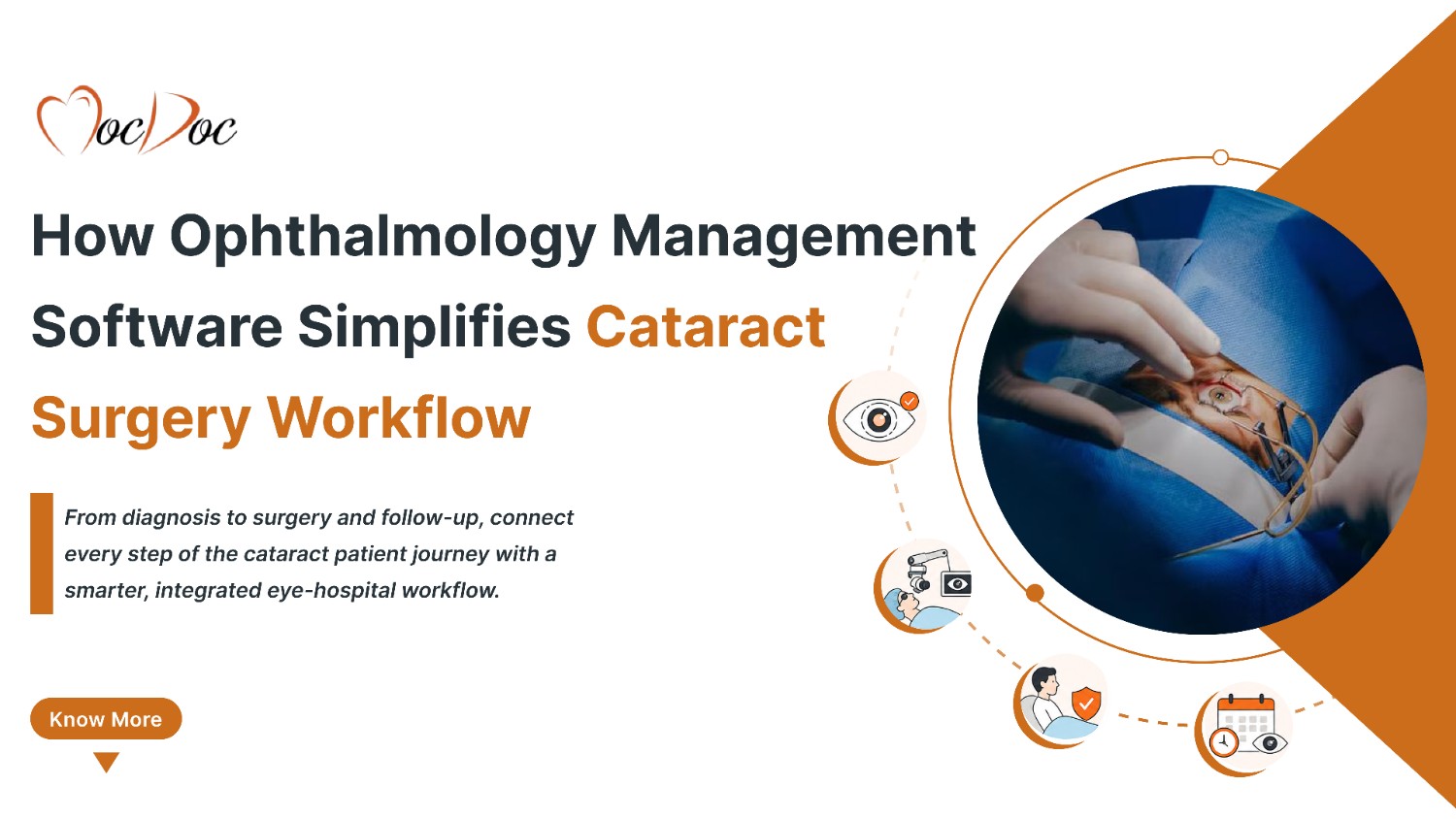
While cataract surgery may seem to be one single process, it is in actuality a combination of many processes that take place in a big eye hospital. This includes the initial stage in a branch hospital where the patient goes through a simple eye check up, gets to meet the optometrist, ophthalmologist, counsellor, undergoes investigation, gets an OT appointment, goes through the process of surgery and then comes back for follow-ups. If such processes are handled manually and using disparate systems, delays and updates are bound to happen.
This is when Ophthalmology Practice Management Software comes to play.
How Does Cataract Surgery Happen in a Large Eye Hospital?
The process generally starts with registration and initial eye screening. The patient can get to meet the optometrist first and undergo screening processes like visual acuity, automated refraction (AR), eye pressure, and other preliminary eye tests.
Later on, the ophthalmologist analyses the results obtained through these tests and conducts the clinical eye exam. Once the cataract is diagnosed, the patient proceeds from the normal eye treatment process to the cataract surgery process.
This change should be easy and seamless, especially in an eye hospital of a considerable size. The information about the patient must not have to be reentered at each and every department.
What Is the Cataract Surgery Workflow?
A typical cataract workflow can be understood as:
Consultation → Hub-and-Spoke Coordination → Counselling → OT Booking → Surgery → Insurance Settlement → Follow-Up
| Stage | What Happens | How Practice Management Software Helps |
| Consultation | Ophthalmologist confirms cataract and recommends surgery | Stores diagnosis, clinical findings and surgery recommendation |
| Hub-and-Spoke Model | Patient may be referred from a branch to a central surgical hub | Connects branch records with the central hospital |
| Counselling | Counsellor explains surgery, package, cost and insurance | Counsellor module tracks patient decision and follow-ups |
| OT Booking | Surgery date, surgeon and OT are scheduled | Prevents scheduling conflicts and provides OT visibility |
| Surgery | Patient completes pre-op, surgery, recovery and discharge | Tracks surgery status and patient movement |
| Insurance Settlement | Authorization, claim and settlement are processed | Tracks approvals, patient payable amount and settlement status |
| Follow-Up | Patient returns for post-operative review | Manages appointments, prescriptions and follow-up history |
Connecting the Hub-and-Spoke Model
Large eye-care networks often operate through a hub-and-spoke model. Branches or spokes can handle registration, refraction, eye pressure testing, consultation, optical sales and cataract identification. The central hub can then manage advanced services, OT operations and cataract surgeries.
For example, a patient can move from:
Branch Registration → Refraction → Ophthalmologist → Cataract Diagnosis → Counselling → Surgery Referral → Hub OT Booking → Surgery → Follow-Up
This model helps hospitals use their central surgical infrastructure efficiently while allowing branches to remain closely connected to the patient's journey.
Making Counselling More Organized
Counselling is an important part of cataract conversion. Once surgery is recommended, patients often have questions about the procedure, cost, lens options, insurance coverage and recovery.
A dedicated Counsellor Module can help the team record these discussions and track the patient's decision. Patients who are ready can move toward surgery booking, while those who need more time can be followed up later.
Instead of relying on notebooks, spreadsheets or personal reminders, the hospital can maintain a clear status for every cataract case.
Simplifying OT Booking and Surgery
After the patient confirms surgery, several activities need to happen before the OT date. Investigations, medical clearance, insurance verification and surgery scheduling must be coordinated.
With Hospital Management Software, the OT team can view important details such as the patient, surgeon, surgery type, eye to be operated, date, time, OT and pre-operative status.
On the surgery day, the workflow can continue from patient check-in → pre-op preparation → OT → surgery → recovery → discharge. Updating the patient's status at each stage gives other departments better visibility.
Bringing Insurance and Settlement Into the Workflow
Insurance can add another layer of complexity to cataract surgery. Eligibility, pre-authorization, approved amounts, claims and settlement status all need to be tracked.
With connected Practice Management Software, the financial team can follow the insurance journey alongside the clinical journey. This reduces the need to search through multiple records and makes pending claims easier to identify.
How Ophthalmology Management Software Simplifies the Process
The biggest advantage is connectivity. Instead of separate systems for registration, consultation, counselling, OT and billing, an integrated Eye Hospital Software can connect these functions.
It can help hospitals:
- Maintain a single patient record
- Connect optometrist and ophthalmologist workflows
- Track cataract cases from diagnosis to surgery
- Manage counsellor follow-ups
- Schedule OT slots
- Track surgery status
- Manage billing and insurance
- Schedule post-operative follow-ups
- Compare branch-level performance
- Monitor doctors, surgeries, revenue and conversions
This creates better visibility for both clinical teams and hospital management.
MocDoc – Best Ophthalmology Management Software
MocDoc Ophthalmology Management Software is designed to bring different eye-hospital activities together in one connected platform. From patient registration and consultation to optical operations, cataract workflows, counselling, OT booking, billing, insurance and follow-up, the system can support the complete patient journey.
For multi-location eye hospitals, branch-centric reporting and centralized visibility can also help management understand what is happening across different locations. Teams can track patient volumes, cataract identification, surgery referrals, conversions, optical sales, insurance cases and revenue.
The goal is simple: reduce operational gaps and help every department work with the same patient information.
Conclusion
Cataract surgery management is not only about what happens inside the OT. It begins much earlier with patient registration, clinical assessment and diagnosis, and continues through counselling, scheduling, surgery, insurance and follow-up.
A well-connected healthcare practice management software solution can bring these steps together and make the entire journey easier to manage. For growing eye-hospital networks, this can mean better coordination, clearer reporting and a smoother experience for both patients and staff.
Want to see how a connected eye-hospital workflow can work for your organization? Book a MocDoc demo and explore how Ophthalmology Practice Management Software can simplify your cataract surgery operations.