How ABDM Works: Complete Guide to ABHA and Digital Health Records
Posted On
2026062413:22:12
By
Mohammed Siddiq

India's healthcare is moving towards digitization. Hospitals, clinics, laboratories, and all healthcare providers are moving from paper-based processes to digital healthcare management. One of the most important players in the process is Ayushman Bharat Digital Mission (ABDM).
ABDM is providing healthcare organizations with an opportunity to create a safe connected environment for exchanging patient data. It improves accessibility, increases patient satisfaction, and makes clinical decisions possible.
Hospitals are moving forward towards digital healthcare and should adopt ABDM Compliant Hospital Management Software.
What is ABDM?
Ayushman Bharat Digital Mission is an initiative aimed at developing India's digital healthcare ecosystem by creating common standards for exchanging health information safely and efficiently.
The main objective of ABDM is to:
- Create digital health identities.
- Provide secure sharing of health records.
- Increase healthcare accessibility.
- Create a connected healthcare ecosystem.
- Eliminate paperwork and manual processes.
ABDM provides the opportunity for patients to manage their health records while healthcare providers have access to authorized information.
How ABDM Works
ABDM connects all stakeholders in the healthcare ecosystem via a safe digital infrastructure. It involves patients, hospitals, laboratories, clinics, pharmacies, and healthcare applications.
The working process follows these steps:
- Creation of ABHA ID
Each patient gets a unique ABHA number used as his/her digital health identity.
2. Generation of Health Records
When the patient visits any healthcare provider, digital health records are created.
3. Patient Consent
The patient consents to sharing health information.
4. Secure Data Exchange
Healthcare providers can exchange information with the patient's authorization.
5. Better Clinical Decisions
Doctors get the ability to access previous medical history, reports, prescriptions, and treatments.
This interoperability helps to collaborate with maintaining data security.
Understanding ABHA
ABHA (Ayushman Bharat Health Account) is a digital health identity of each patient.
Each ABHA number is unique and helps patients to manage their health records digitally.
Benefits of ABHA include:
- Having one health identity in different healthcare providers.
- Access to medical records.
- Secure sharing of health information based on the patient's consent.
- No paperwork.
- Fast registration when visiting hospitals.
- Better continuation of care.
Each patient can use the same ABHA number when visiting several hospitals and having the same health history.
Understanding Health Records in ABDM
Digital health records are an important component of ABDM.
These records may include:
- Consultation details.
- Prescriptions.
- Laboratory reports.
- Radiology reports.
- Discharge summaries.
- Vaccination records.
- Clinical observations.
Patients remain the owners of the health information. Healthcare providers can access this information only after getting proper authorization.
This approach increases transparency and involves patients in the process of managing their health.
What is Healthcare Interoperability?
Healthcare interoperability is the capability of different healthcare systems to exchange information and collaborate.
Traditionally, hospitals used different systems which do not communicate with each other. It leads to delays, duplication of the investigations, and incomplete patient histories.
ABDM solves the problem by creating common digital standards.
Benefits of healthcare interoperability include:
- Faster diagnosis.
- More effective treatment planning.
- Reduction of duplication of investigations.
- Improvement of the patient safety.
- Efficient healthcare delivery.
- Coordination among the healthcare providers.
Interoperability creates a connected healthcare ecosystem with efficient and safe information exchange.
ABHA & ABDM Compliant Hospital Software
Modern hospitals need software which supports ABDM requirements and digital healthcare standards.
ABHA & ABDM Compliant Hospital Software helps hospitals to:
- Generate ABHA IDs.
- Connect patient records.
- Exchange information securely.
- Manage patient consents.
- Keep digital records.
- Support interoperability standards.
- Improve patient experience.
ABDM enabled HMIS (Hospital Management Information System) prepares hospitals for the future and allows them to be a part of India's digital healthcare ecosystem.
How ABDM Integrates with Hospital Management Software
Hospital Management Software is an operational backbone of the healthcare organization. Integrating it with ABDM, you get the powerful digital healthcare platform.
The ABDM HIMS Software allows to:
- Patient Registration
The patient can register with his/her ABHA number.
- Digital Health Records
All clinical information is stored digitally and connected to the health account of the patient.
- Consent Management
The patient manages information sharing.
- Information Exchange
Healthcare providers exchange information securely whenever needed.
- Better Care Coordination
The doctors get access to all information of the patient, which helps to make decisions.
An ABDM compliant hospital management system allows the hospital to improve its efficiency while supporting national digital healthcare initiatives.
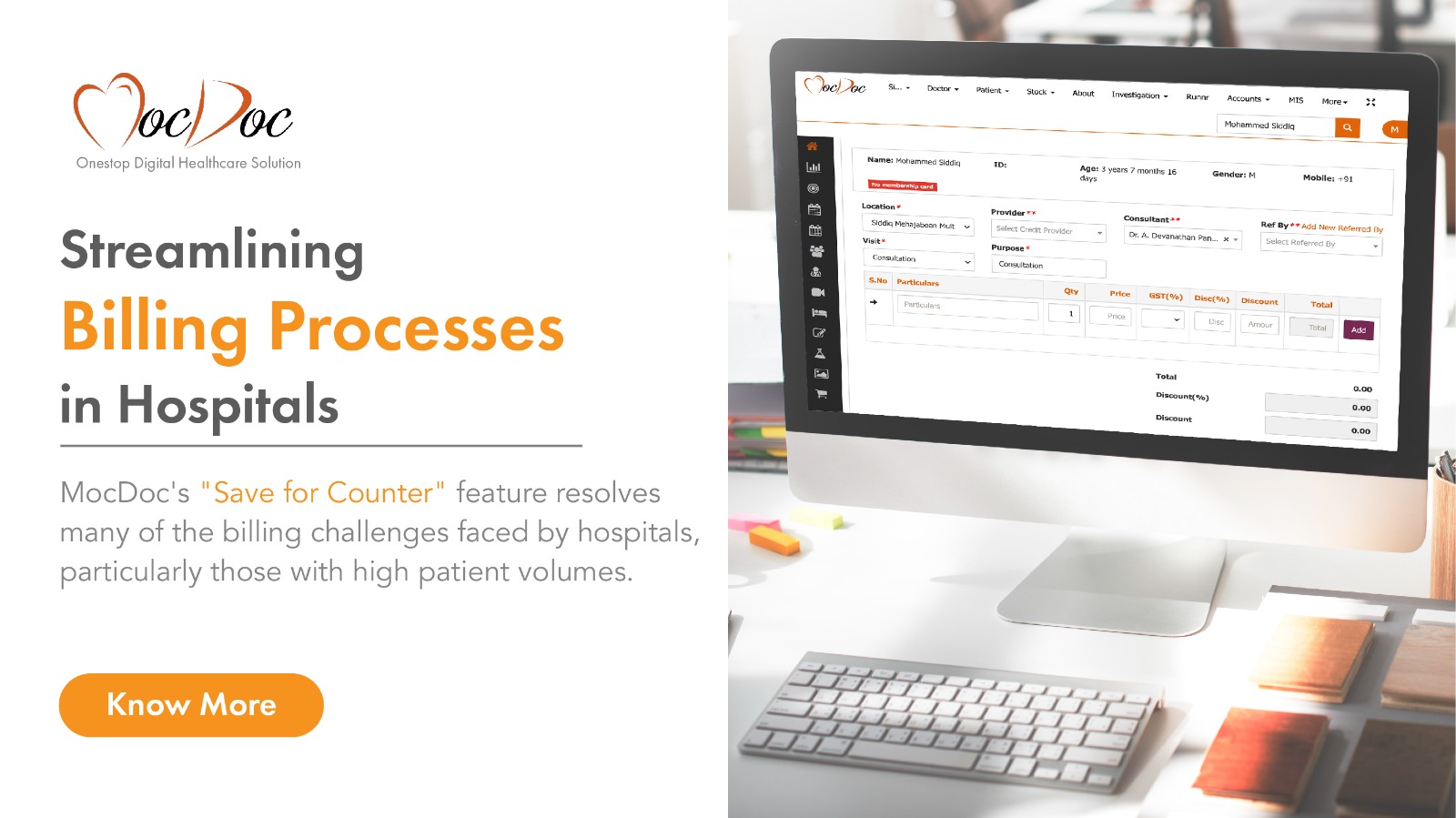
MocDoc – ABDM Complaint Hospital Management Software
MocDoc offers ABDM Complaint Hospital Management Software which helps healthcare organizations to adopt digital healthcare standards.
MocDoc supports :
- ABHA integration.
- Digital patient registration.
- Secure health record management.
- Consent-based information sharing.
- Integrative hospital workflow.
- OPD, IPD, laboratory, pharmacy, and billing management.
- ABDM interoperability.
With MocDoc, hospitals can simplify operations and prepare for the future.
Conclusion
ABDM is changing healthcare by creating a connected, secure, and patient-centered ecosystem. Using ABHA, digital health records, and healthcare interoperability, the healthcare provider can offer better services and increase its operational efficiency.
Adopting ABDM complaint hospital management software, hospitals not only meet the digital healthcare standards but prepare themselves for the future.
With India's healthcare ecosystem constantly developing, ABDM-enabled solutions will be an integral part of future smarter, faster, and connected healthcare services.