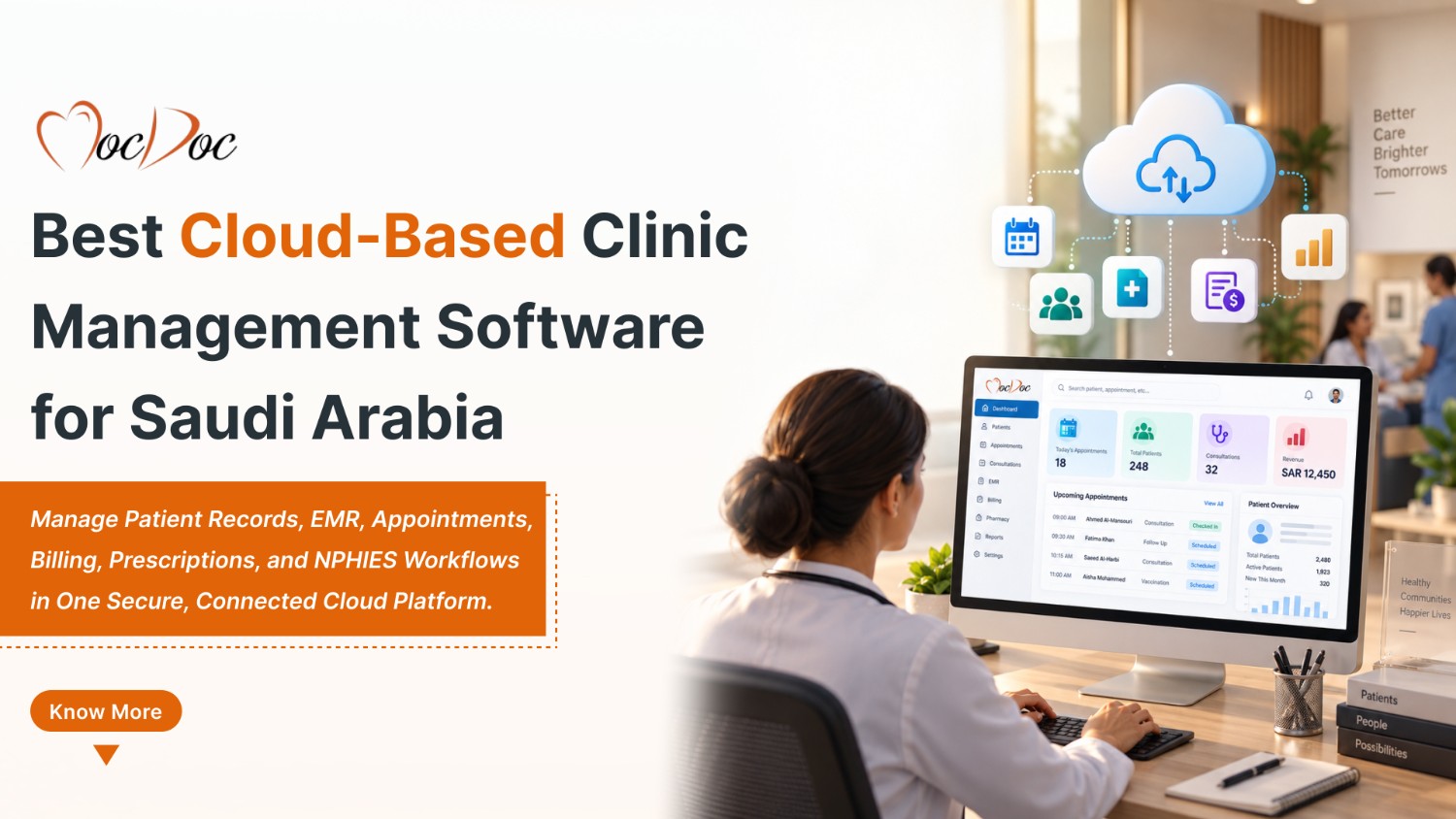
AI-Powered Clinic Management Software with CRM for Modern Clinics
Posted On
2026022613:22:12
By
Mohammed Siddiq

Healthcare is changing fast. Clinics and hospitals are no longer judged only by treatment quality. Today, patients expect speed, clarity, follow-up, and a smooth digital experience. This is where Clinic Management Software and CRM features play a powerful role. When combined with AI, they become a growth engine, not just a tool.
Let’s understand why.
What is CRM and How Does It Work in Clinics and Hospitals?
CRM stands for Customer Relationship Management. In healthcare, “customers” are your patients. CRM helps clinics and hospitals manage patient relationships in a structured and intelligent way.
A healthcare CRM typically helps with:
- Storing patient details securely
- Tracking appointments and visits
- Managing follow-ups and reminders
- Recording communication history
- Handling feedback and engagement
In simple words, CRM ensures no patient feels forgotten.
For clinics and hospitals, CRM is not about sales, it is about care continuity. It helps doctors stay connected with patients beyond the consultation room.
Imagine this:
A patient visits your clinic. With CRM:
- They receive appointment confirmations
- They get medication reminders
- They receive preventive care alerts
- They get follow-up messages
This builds trust, loyalty, and satisfaction.
How Clinic Management Software Works, With or Without CRM Features
Clinic Management Software is designed to handle daily operations:
- Appointment scheduling
- Billing and invoicing
- Electronic Medical Records (EMR)
- Prescription management
- Inventory tracking
- Reports and analytics
Without CRM features, the software works like an operations manager.
With CRM features, it becomes an operations + relationship manager.
That’s the difference.
A clinic using basic software manages data. A clinic using software with CRM manages patient experience.
And experience is everything.
Can a Clinic Run Without CRM?
Yes, but at a cost.
A clinic can function without CRM, just like a clinic can run without digital records. But challenges quickly appear:
- Missed follow-ups
- No structured patient communication
- Lost opportunities for repeat visits
- Poor engagement with chronic patients
- Weak patient retention
Without CRM, patient relationships depend heavily on manual effort.
And manual systems break under growth.
As patient volume increases, remembering every follow-up or tracking every interaction becomes nearly impossible.
CRM is not a luxury. It is a stability system for scaling clinics.
Using Clinic Management Software: A Smarter Way Forward
Modern clinics are embracing Clinic Management Systems because they:
- Reduce paperwork
- Minimize human errors
- Improve billing accuracy
- Speed up workflows
- Enhance patient satisfaction
Doctors spend less time on administration and more time on care.
Front desk staff handle appointments efficiently.
Accounts become transparent.
Patients experience faster service.
The clinic transforms from “busy” to organized and predictable.
How Clinic Management Software Cuts Down CRM Needs
Here’s an interesting truth:
Advanced Clinic Software often includes built-in CRM capabilities.
This means clinics do not always need a separate CRM system.
Integrated solutions can offer:
- Automated reminders
- Patient communication tools
- Follow-up tracking
- Engagement workflows
- Feedback collection
Instead of juggling multiple platforms, clinics get one unified system.
Benefits include:
- Lower software costs
- Easier staff training
- Better data synchronization
- Fewer integration issues
In short: Less complexity, more control.
Why MocDoc Stands Tall
Among many healthcare software options, MocDoc has built a strong reputation.
What makes it stand out?
MocDoc combines:
- Clinic Management Software
- Hospital Software capabilities
- AI-driven CRM features
- Billing and EMR systems
- Patient engagement tools
It is designed specifically for healthcare , not adapted from generic business software.
Key strengths include:
- Easy-to-use interface
- Smart automation
- AI-supported workflows
- Strong reporting features
- Scalable for clinics and hospitals
But beyond features, MocDoc delivers something more important:
Confidence.
Confidence that:
- Follow-ups won’t be missed
- Billing stays accurate
- Records stay organized
- Patients stay engaged
For growing clinics, this peace of mind is priceless.
Conclusion: Technology That Feels Like Support, Not Burden
Healthcare professionals carry enormous responsibility. Software should reduce pressure , not add to it.
The right Clinic Management System with AI CRM features does exactly that.
It helps clinics:
- Work faster
- Stay organized
- Build stronger patient relationships
- Grow sustainably
Because growth in healthcare is not only about more patients.
It is about better patient journeys.
Clinics that invest in intelligent digital systems today are building the foundation for tomorrow’s success.
And solutions like MocDoc are proving that technology, when designed with empathy, becomes an invisible partner in care.